Product Specifications
Below are the key product attributes and specifications that provide detailed information about this item:
Brand: MasimoSold By: EachApplication: Pulse Co-OximeterWHSXX: MCK
Product Overview
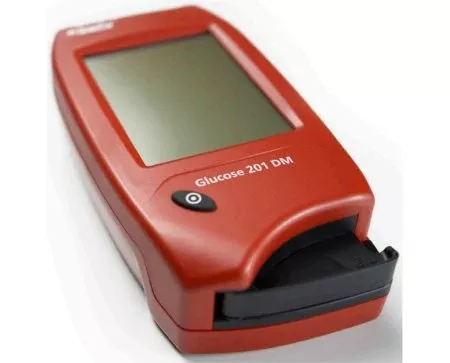
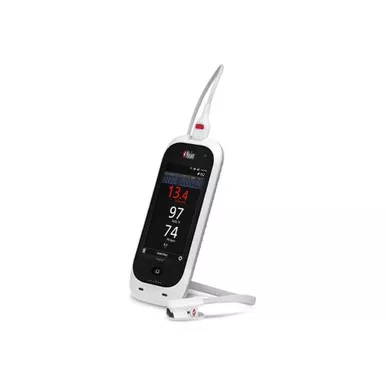
The Masimo Rad-67 – 9825 Handheld Pulse Co-Oximeter is a portable, advanced medical device designed for accurate and noninvasive monitoring of oxygen saturation (SpO2), pulse rate, perfusion index (Pi), and multiple blood parameters, including total hemoglobin (SpHb), carboxyhemoglobin (SpCO), and methemoglobin (SpMet). Suitable for both adult and pediatric patients, this device provides reliable, real-time measurements in various clinical settings.
Key Features:
– Multi-Parameter Monitoring: Measures SpO2, pulse rate, Pi, SpHb, SpCO, and SpMet.
– Masimo SET Technology: Ensures accurate readings in challenging conditions, including low perfusion and motion.
– Handheld & Portable: Lightweight and easy to carry for point-of-care use.
– Rechargeable Battery: Long-lasting power for extended use.
– Bright, Easy-to-Read Display: Clear readings in different lighting conditions.
– Adult & Pediatric Use: Includes multiple sensor options for different patient sizes.
– Quick Results: Provides real-time data for rapid clinical decision-making.
Specifications:
– SpO2 Range: 0–100%
– Pulse Rate Range: 20–250 bpm
– SpHb Range: 0–25.6 g/dL
– SpCO Range: 0–40%
– SpMet Range: 0–15%
– Perfusion Index (Pi): 0.02–20%
– Battery Life: Up to 12 hours (rechargeable)
– Connectivity: Optional Bluetooth and USB data transfer
Use Suggestion:
Ideal for hospitals, emergency medical services (EMS), and clinical environments where rapid, noninvasive assessment of oxygenation, hemoglobin levels, and blood gases is required. Suitable for monitoring patients during surgery, critical care, or transport. Pediatric sensors ensure accurate readings for younger patients.